How to Choose a Large Bag of Ice
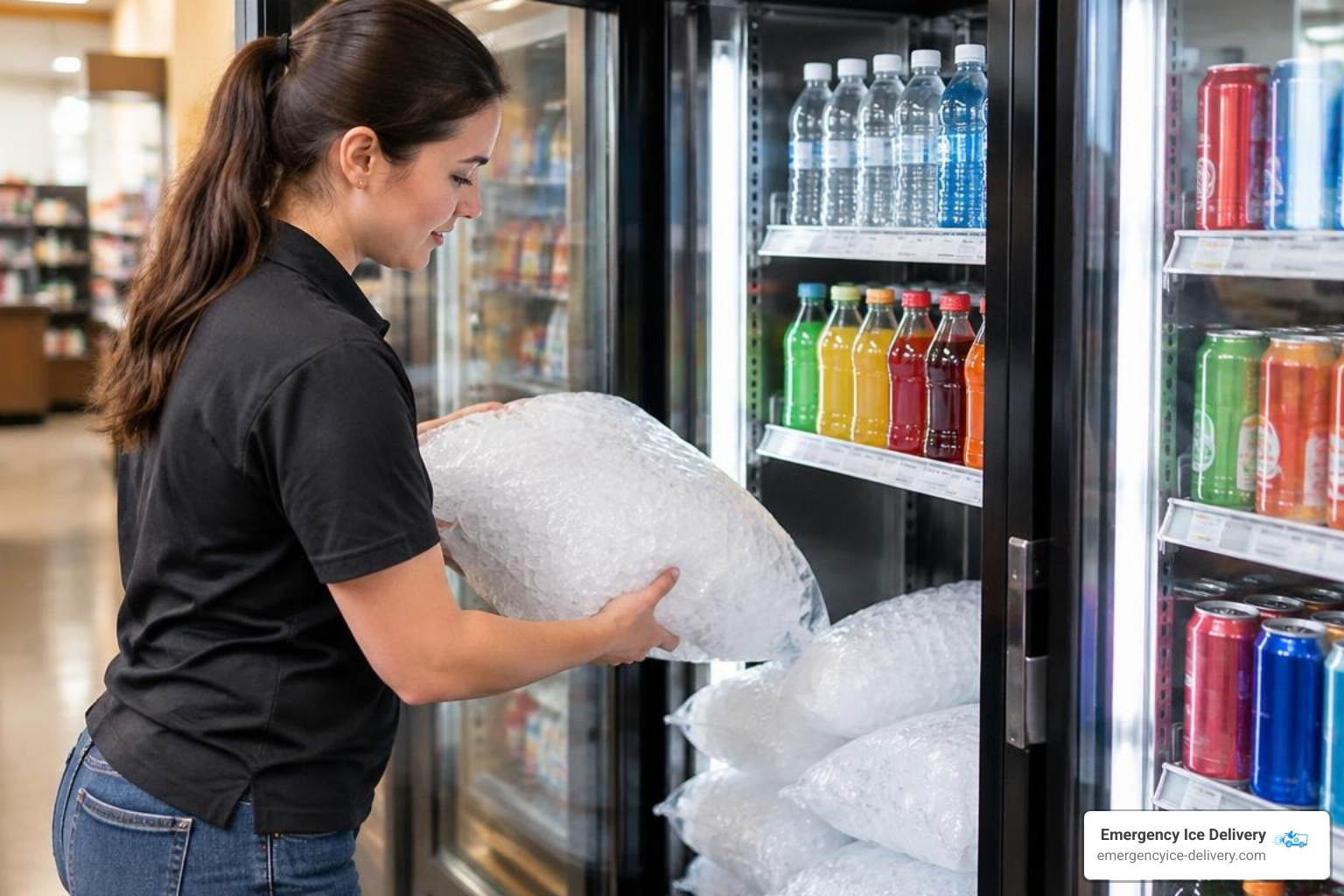
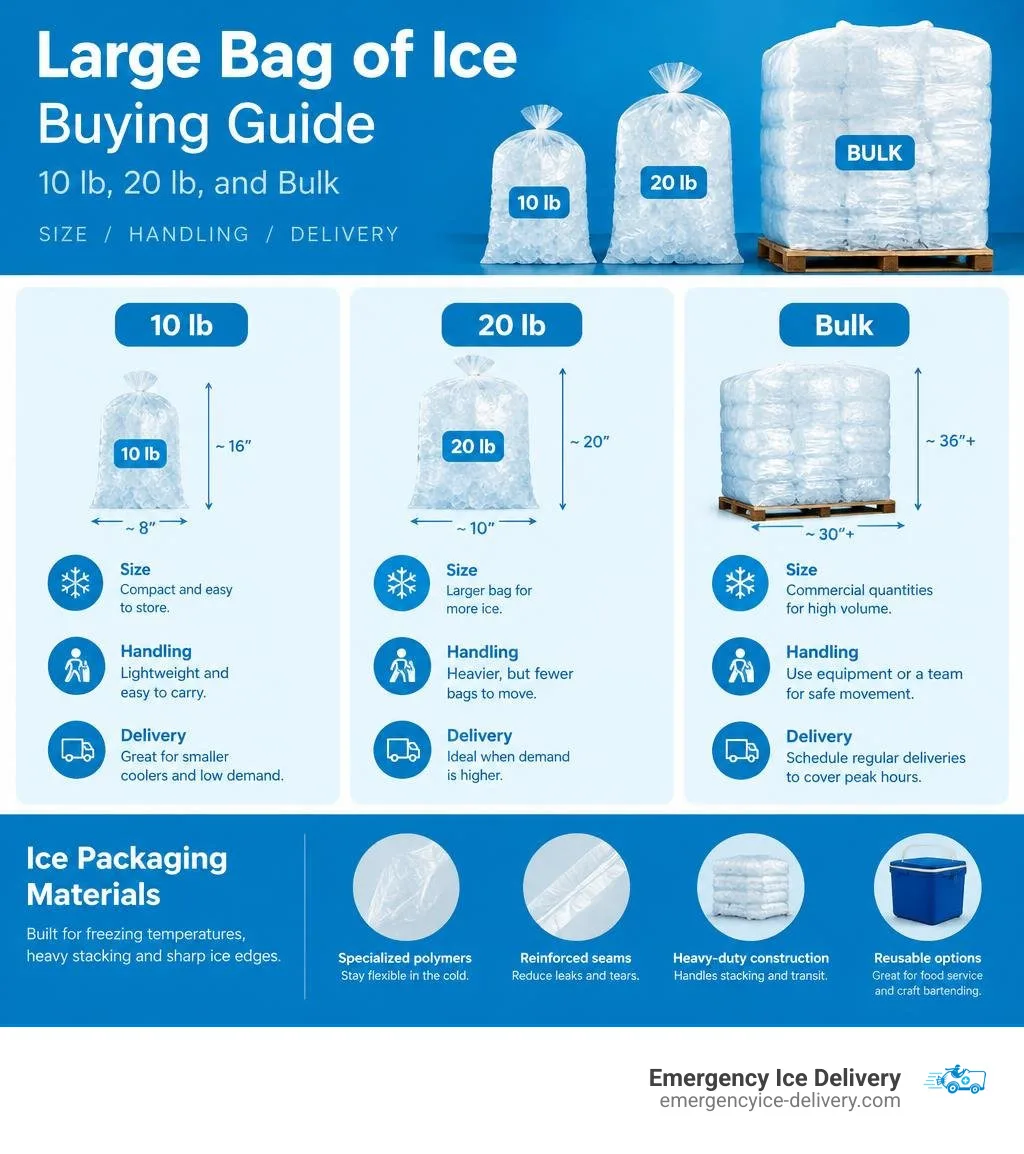
Buying ice for a restaurant or event? A 10 lb bag is easy to carry and fits smaller coolers. A 20 lb bag means fewer bags to handle when demand is high. For bulk needs, ask your supplier about larger commercial sizes and a delivery schedule that covers peak hours.
Check the bag’s seams and closure before buying, especially if staff will move or stack it. If your ice machine is down, delivery matters as much as bag size. Emergency Ice Delivery produces and delivers bagged pellet ice, so you can restock without sending staff to a store.
Types and Materials of a Large Bag of Ice
Choosing the right ice packaging involves more than just picking up plastic off a shelf. When dealing with freezing temperatures, the molecular structure of the packaging determines whether your ice stays intact or splits across the floor. Standard plastics become brittle when exposed to sub-zero temperatures, leading to seam tears and structural failure during transit.
To prevent these messy accidents, commercial ice packaging relies on specialized polymers designed to withstand freezing environments, puncture hazards from sharp ice edges, and heavy stacking weights. Beyond single-use plastic, specialized reusable options serve distinct niches in food service and craft bartending.
| Packaging Type | Typical Gauge / Material | Puncture Resistance | Cold-Crack Resistance | Best Use Case |
|---|---|---|---|---|
| Standard Utility Poly | 1.25 - 1.45 mil LDPE | Moderate | Moderate (down to 15°F) | Light retail, short-term home storage |
| Heavy-Duty Commercial Poly | 1.75 - 3.0 mil LDPE / EVA / Metallocene | High to Very High | Excellent (down to -20°F) | High-volume storage, wholesale transit, commercial delivery |
| Reusable Canvas Lewis Bag | Heavyweight Cotton Canvas | High (Abrasion) | N/A (Fabric) | Manual ice crushing, craft cocktail bars |
| Specialized 3-Layer Insulated | Multi-layer composite | High | High | Medical transport, extended melt-retention needs |
Heavy-Duty Plastic Ice Bags
Commercial operations depend heavily on premium polyethylene films. The standard material used across the industry is virgin Low-Density Polyethylene (LDPE), frequently modified with Ethylene Vinyl Acetate (EVA) copolymers or metallocene additives. These specialized polymers increase elastic stretch and provide critical cold-crack resistance, preventing the film from snapping when dropped or tossed into freezers.
Thickness is measured in mils (thousandths of an inch). While basic budget bags often measure around 1.25 to 1.45 mil, heavy-duty commercial bags range from 1.75 mil up to 3.0 mil for maximum security. For instance, high-capacity commercial bags utilizing 1.75 mil metallocene-enhanced film withstand heavy transport without blowing out their bottom gussets. Using the best bulk ice bags to keep frozen and secure ensures that large inventories remain completely sealed throughout transport and freezer storage.
In craft bartending and specialized kitchen prep, reusable canvas Lewis bags offer an alternative to plastic. These 100% canvas bags naturally absorb excess surface moisture while you crush ice with a mallet, yielding dry, crisp crushed ice for cocktails like mint juleps and Moscow Mules. For medical or specialty temperature maintenance, multi-layer insulated bags reduce exterior condensation and slow down melting rates.
Standard Sizes and Capacity Comparison
Selecting the correct bag dimensions and volume depends directly on your storage layout, event scale, and cooling needs. Ice bag capacity is measured by weight, but physical cube geometry and packing density heavily influence how much ice fits inside standard dimensions. If you are uncertain about physical mass and volume dimensions, our guide on how much a large bag of ice weighs breaks down exact measurements across every major standard size.
- 5 lb to 8 lb Bags: Measuring around 9” x 18”, these compact bags are primarily intended for quick personal cooler fills, minor home usage, and small tabletop beverage buckets.
- 10 lb Bags: Measuring approximately 11.5” x 22” or 12” x 21”, the 10 lb bag is standard across grocery retail and light food service. It is easy for individual staff members to lift and fits neatly into residential refrigerator freezer bins.
- 20 lb Bags: The true workhorse for events, catering companies, bars, and hospitality setups. A standard 20 lb bag measures roughly 14” x 27” and delivers enough thermal mass to chill large coolers efficiently while reducing the total number of individual bags staff must open.
- 50 lb Sacks: Heavy-duty bulk bags constructed with up to 3.0 mil film thickness, designed for industrial packing, commercial seafood displays, and institutional kitchens.
Choosing the Right Large Bag of Ice for Events
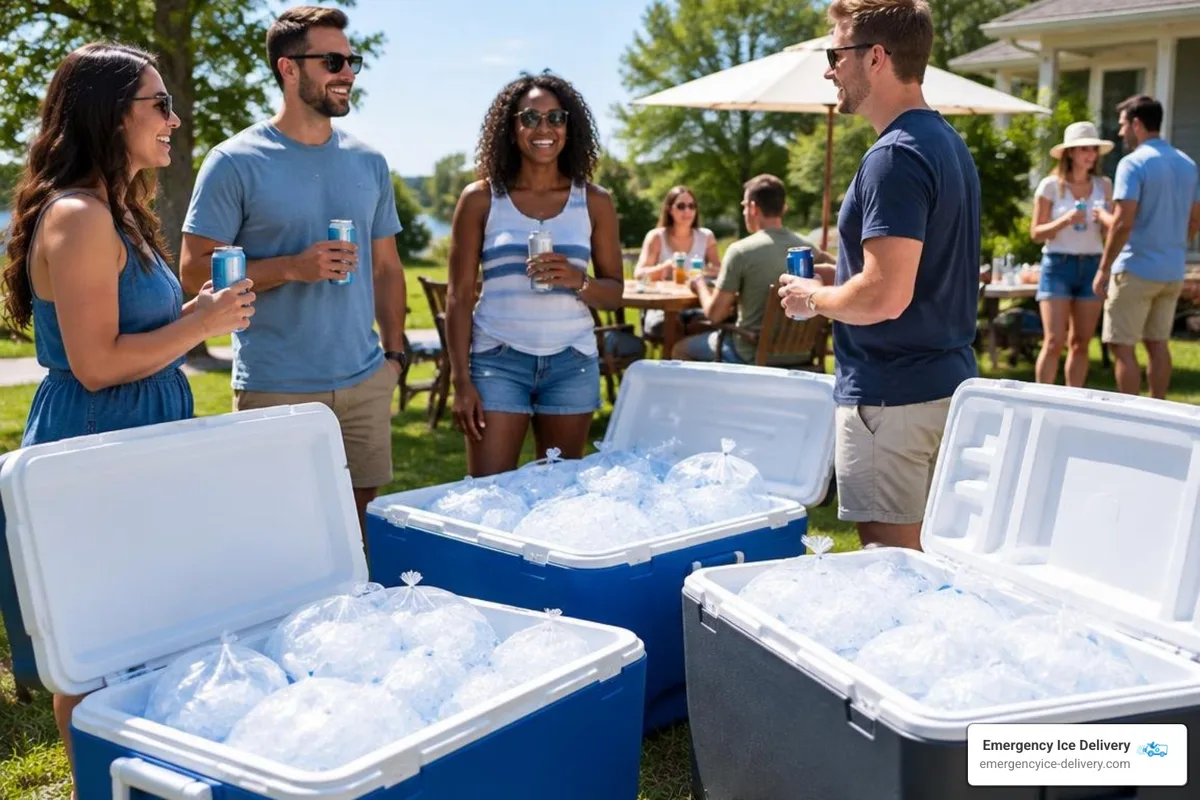
When planning weddings, festivals, corporate galas, or sports tournaments, running out of ice can bring beverage service to a sudden halt. A 10 lb bag works well for quick home gatherings, but larger gatherings create higher thermal demand. Opting for a standard large bag of ice in a 20 lb format cuts down on packaging waste and helps maintain steady drink temperatures during high-volume rushes.
When calculating ice requirements for an event, plan for roughly 1.5 to 2 pounds of ice per guest for standard cocktail and beverage service. If you are operating outdoors during summer weather in Jacksonville, FL or Charleston, SC, increase this estimate to 2.5 to 3 pounds per person to account for faster ambient melting and the need to keep holding coolers cold. For step-by-step sizing breakdowns, check out our guide to choosing the right 20 pound ice bags for large-scale drink service.
Commercial and Food Service Bag Sizes
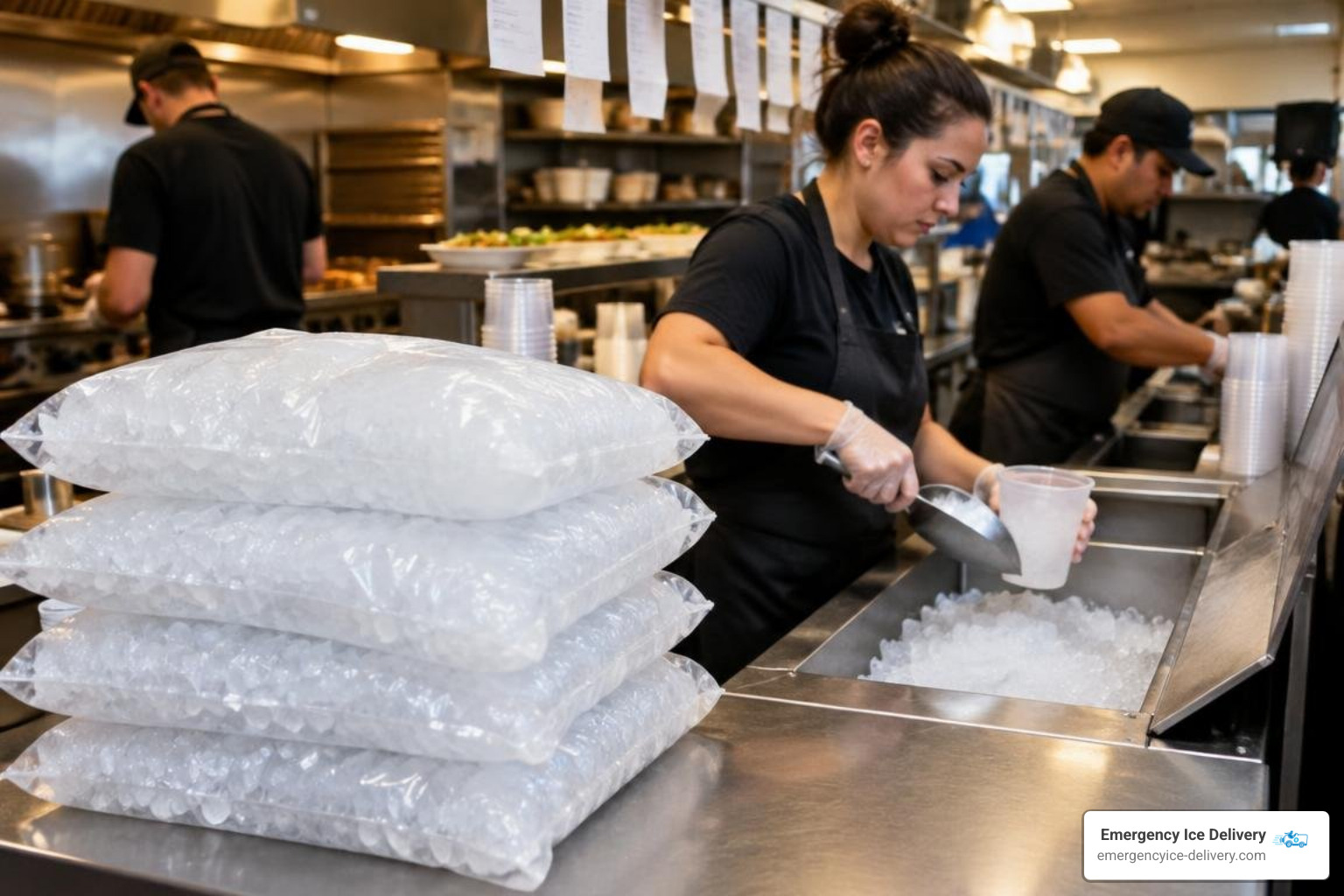
High-volume operations like banquet halls, seafood markets, and busy bars run through hundreds of pounds of ice every shift. In commercial kitchens, ice protects perishable food along prep lines, blanches vegetables, and keeps seafood fresh on raw-bar displays.
Handling dozens of small consumer bags slows down kitchen staff and creates excessive plastic waste. Commercial facilities rely on 20 lb and 50 lb configurations to quickly pack ice bins and prep stations. Establishing a reliable supply of wholesale bulk bagged ice ensures your kitchen stays compliant with food-safety standards without overwhelming back-of-house storage.
Key Buying Factors: Durability, Closures, and Pricing
Not all ice packaging performs identically under pressure. When evaluating bags for your establishment, focus on three primary mechanical factors: closure security, seam thickness, and cost efficiency.
- Closure Types:
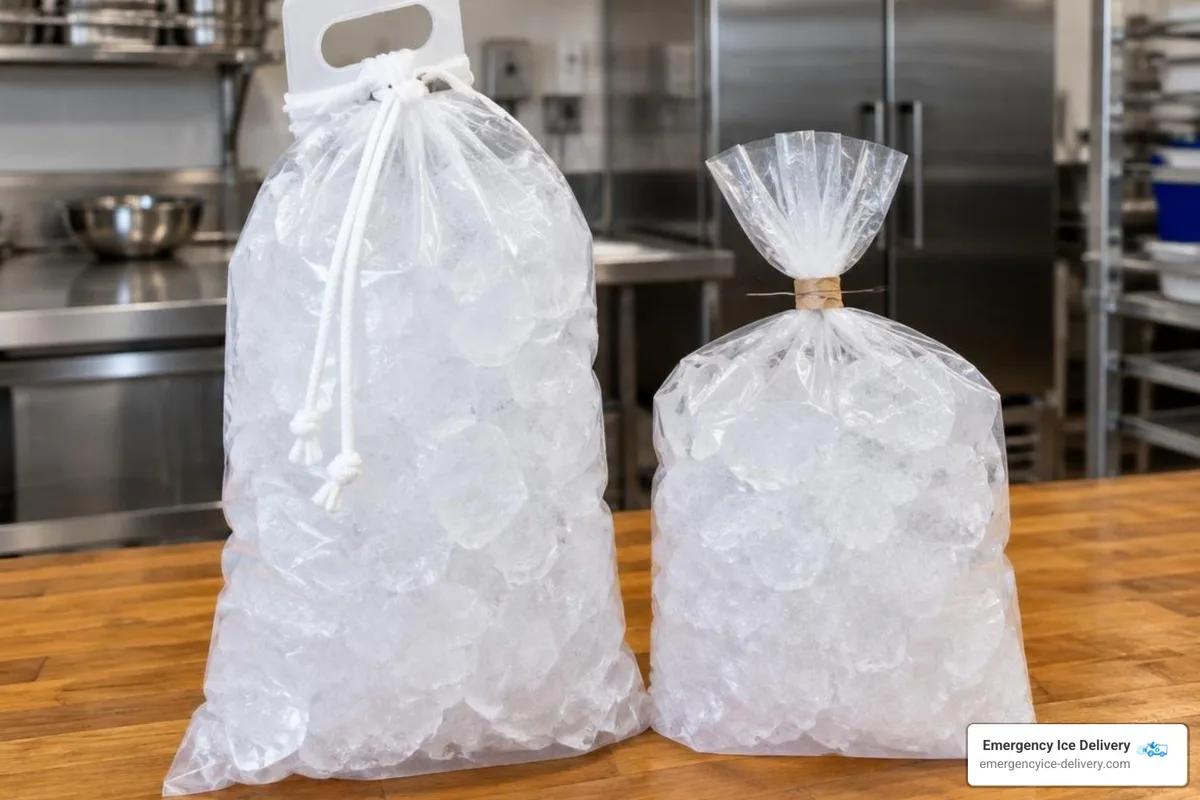
- Drawstrings: Integrated cotton or plastic drawstrings allow fast, tool-free closing and provide a built-in handle for quick lifting. They are sold in bulk cases and offer strong convenience for prep environments.
- Wire Twist Ties: Standard flat-top bags secured with paper-wrapped wire twist ties or plastic ties. These are the most economical option for bulk operations and are sold in high-count cases.
- Heat Sealing / Hog Rings: Industrial packagers use thermal heat seals or metal hog rings to create tamper-evident, airtight closures for commercial wholesale.
- FDA Food-Contact Compliance: Ice is legally categorized as a food product. Bags must be manufactured from virgin, food-grade resins approved by the FDA (Food and Drug Administration) without toxic plasticizers or chemical additives that could leach into beverages or alter the taste of clean, filtered ice.
- Cost Economics: Sourcing bulk cases of unfilled bags brings packaging costs down significantly, while commercial ice delivery programs lower your price per pound and eliminate the labor of staff store runs.
Evaluating Thickness and Seam Reliability in a Large Bag of Ice
Seam failure is the most common issue with low-grade ice bags. When frozen ice cubes freeze into solid clumps during storage, bags must withstand impact when dropped or separated on hard surfaces. Budget bags constructed from thin 1.45 mil LDPE without elastomeric additives often show lower customer ratings, such as 2.9 out of 5 stars, primarily due to split side seams and blown bottom seals.
In contrast, commercial-grade bags featuring 1.75 mil thickness with metallocene additives routinely achieve higher performance ratings (4.0 out of 5 stars and above across thousands of commercial reviews). The extra polymer strength prevents tearing under pressure, keeping transport clean and protecting your walk-in freezer floors from loose ice blocks.
Sourcing Options: Retail vs. On-Demand Wholesale Delivery
When your business or event requires ice, you have three primary sourcing methods:
- Retail Convenience & Big-Box Stores: Suitable for sudden, small-scale needs (under 60 lbs). However, you pay peak retail pricing, and transport is limited by your vehicle space. Staff must leave their workstations, purchase individual bags, load them manually, and haul them back before they melt.
- Wholesale Club Pickup: Offers lower per-pound pricing for orders up to a few hundred pounds. However, loading heavy pallets into standard vehicles risks puncturing bags, leaves messes from melting ice, and pulls key personnel away from daily operations.
- On-Demand Commercial Delivery: The most efficient option for businesses, festivals, and high-volume venues. A dedicated ice logistics provider drops off pallets of commercial-grade bagged ice directly into your holding bins or walk-in freezers.
If you are coordinating logistics across the Southeast, you can look into finding large bags of ice nearby or read our breakdown on where to buy 20 lb bags of ice through local distributors. For sudden operational emergencies, such as broken ice machines during a busy dinner service, using fast bagged ice delivery options helps ensure fresh inventory arrives on site before drink service slows down.
Frequently Asked Questions
How long does a 20-pound bag of ice last in a standard cooler?
In a standard rotomolded or well-insulated commercial cooler, a 20-pound bag of ice typically lasts between 24 and 48 hours in moderate outdoor conditions (70°F to 80°F). If ambient temperatures reach 90°F or higher, typical during humid summer days in Columbia, SC or Charlotte, NC, expect a lifespan of 12 to 24 hours.
To maximize cold retention, pre-chill your cooler with a sacrificial bag of ice several hours before packing, store beverages pre-chilled, keep the lid latched tightly, and avoid draining cold meltwater unless you need to replace it with fresh ice.
Are commercial plastic ice bags recyclable and safe for food contact?
Yes, provided they are made from virgin low-density polyethylene (LDPE), classified under Resin Identification Code #4. LDPE is widely recyclable through commercial film recycling streams and retail plastic bag drop-off points.
To stay compliant with health department standards, all ice bags used for food service, drink chilling, or direct culinary contact must be manufactured from FDA-approved, food-safe plastic resins that are free of BPA, phthalates, and recycled chemical contaminants.
How much ice should be planned per person for large parties?
For standard parties, banquets, and weddings lasting 4 to 6 hours, plan for 1.5 to 2 pounds of ice per guest. This baseline covers clean cocktail ice as well as keeping display bins and back-bar beverage tubs cold.
If hosting outdoor events in warm climates like Greenville, SC, adjust your planning formula up to 2.5 to 3 pounds per guest to account for faster ambient melting and continuous cooler replenishments.
Conclusion
Managing an uninterrupted ice supply is essential for keeping restaurant services running smoothly, preserving perishable food, and hosting memorable events. Selecting the right bag size, heavy-duty material gauge, and reliable closure prevents split seams and protects your bottom line.
When your venue experiences unexpected rushes or equipment breakdowns, you do not have to pull staff away from customers to make emergency supply runs. We produce and deliver bagged pellet ice directly to your doorstep in as little as 45 minutes with clear pricing and zero hidden surcharges across our regional service hubs in Jacksonville, FL, Charlotte, NC, Columbia, SC, Greenville, SC, and Charleston, SC. When you need dependable bulk cooling on demand, order bagged ice for fast delivery and let our team protect your cold chain.